Board games · Theory
Luck vs skill: how much control do you really have?
How to judge the balance of luck and skill in board and table games, from Snakes and Ladders to chess, poker and Scrooge — and why it matters for winning.
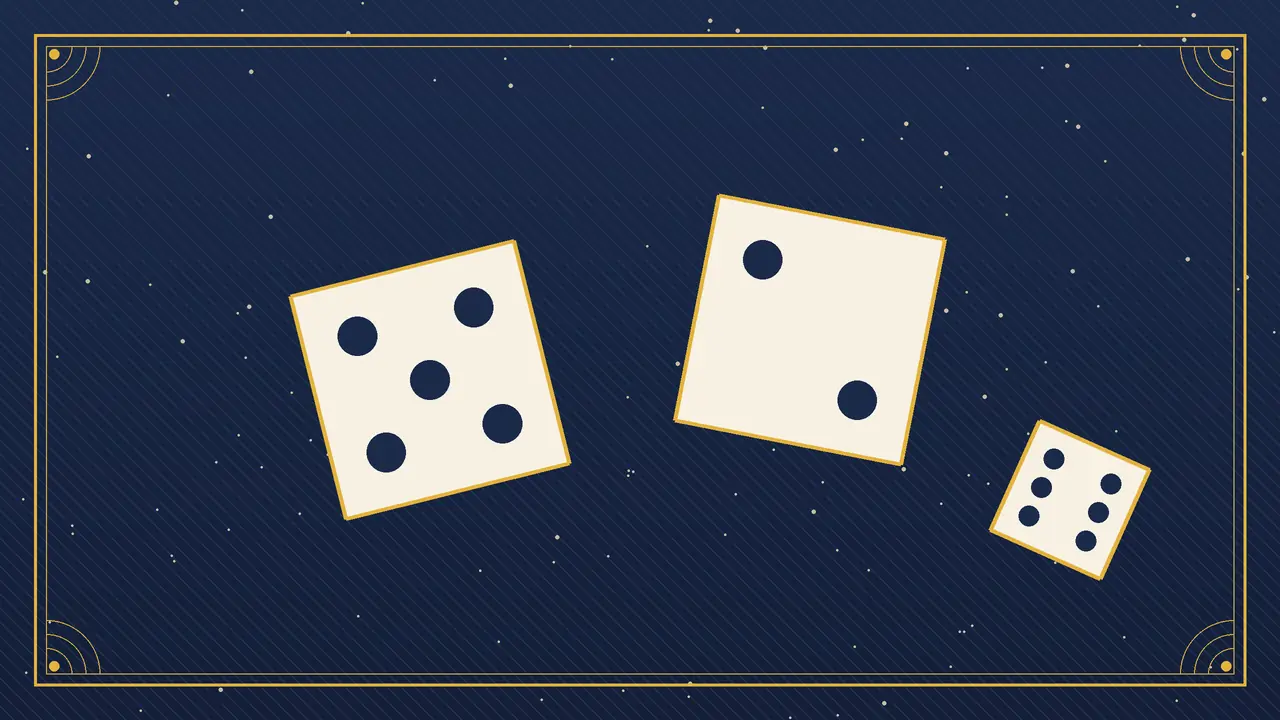
Snakes and Ladders: zero decisions. Chess: zero dice. Almost every other game sits somewhere in between, and where it sits decides how you should play it — and how you should feel when you lose.
A simple test
Ask one question: would a stronger player beat a weaker one most of the time over ten games?
- If the answer is “no better than a coin toss”, the game is luck-driven (Snakes and Ladders, roulette, a lottery).
- If the stronger player wins nearly every time, it is skill-driven (chess, Go).
- If the stronger player wins clearly over many games but loses individual games often, it is mixed — and most good modern games, poker and Scrooge included, live here.
Where the luck enters
Luck can enter a game at different moments, and the timing changes everything.
Input luck happens before you decide: you draw cards or roll dice, then choose what to do with them. Catan’s production, a poker hand and a Scrooge dice roll are input luck. Skilled players thrive on it because they make the best of whatever arrives.
Output luck happens after you decide: you commit to an action, then roll to see if it works. Many war games resolve attacks this way. It feels harsher, because a good decision can be undone by a bad roll.
Scrooge mixes both: you roll to move (input), then choose how to use ghost cards; but the Moment of Truth has an element of output luck, which is exactly why it is so dramatic.
Why variance is not the enemy
Pure skill games can be brutal for mixed groups — the best player always wins. A measured dose of luck keeps weaker players in contention and makes each session feel fresh. The trick for strong players is to measure success over many games, not one evening.
Lessons for the table — and for casino games
Two rules carry over from the board to the casino floor:
- Separate decision quality from result. Holding back a ghost card was right even if a trick hit you anyway. Standing on 17 at blackjack is right even when the next card would have been a 4.
- Know whether skill can beat the house. At poker you play other people, so skill wins over time. At roulette the edge is fixed and no betting system changes it. Our guides to poker, blackjack and roulette explain exactly where that line falls.
Verdict
The best games give you meaningful decisions about luck you cannot control. If you want to win more often, focus on the part you control — card timing, bankroll, position — and stop judging yourself on single rolls.